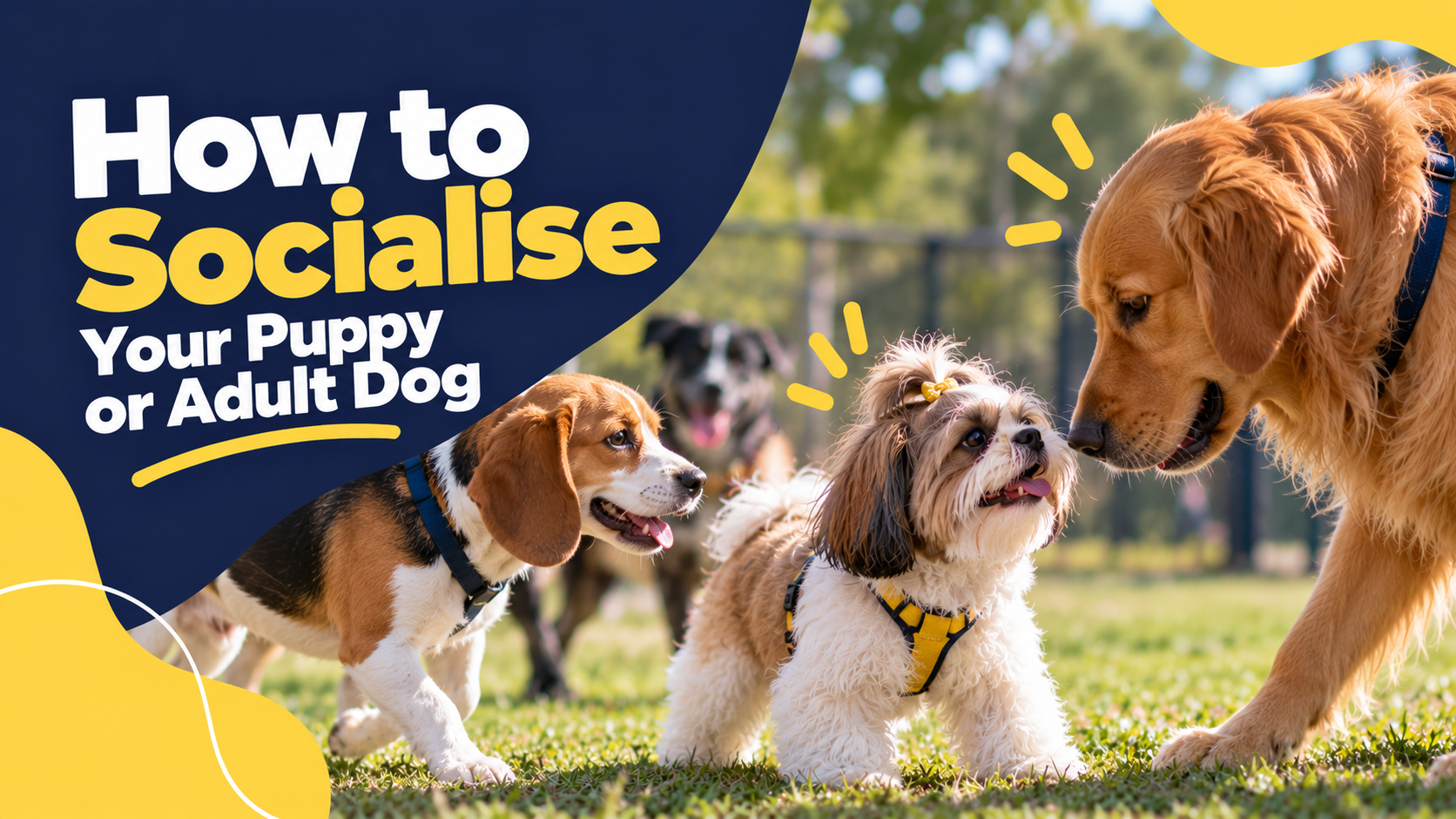
Socialising your dog is one of the most valuable investments you can make in their lifelong behavioral health. However, many pet parents accidentally make things worse by rushing into crowded, chaotic environments too soon.
Whether you have an 8-week-old puppy or a newly adopted adult rescue, here is how to socialise them systematically without triggering fear.
🐾 Action Checklist
Puppy Prime Window: Weeks 3 to 16 (highest neural plasticity).
Adult Dog Rule: Desensitize from a distance using the Look-at-That (LAT) technique.
Golden Rule: Prioritize interaction quality over quantity. One calm exposure beats ten overwhelming ones.
1. The Puppy Window (3 to 16 Weeks)
Between 3 and 16 weeks of age, a puppy’s brain forms permanent associations about what is safe and what is dangerous.
Weekly Exposure Checklist:
Unusual Outfits: Have family members wear motorcycle helmets, winter jackets, sunglasses, and open umbrellas indoors.
Controlled Audio: Play low-volume tracks of thunder, traffic sirens, and crying babies while giving meals.
Paw Handling: Touch and reward each paw, ear, and tooth daily for 30 seconds.
Gentle Introductions: Arrange controlled meets with healthy, fully vaccinated, balanced adult dogs.
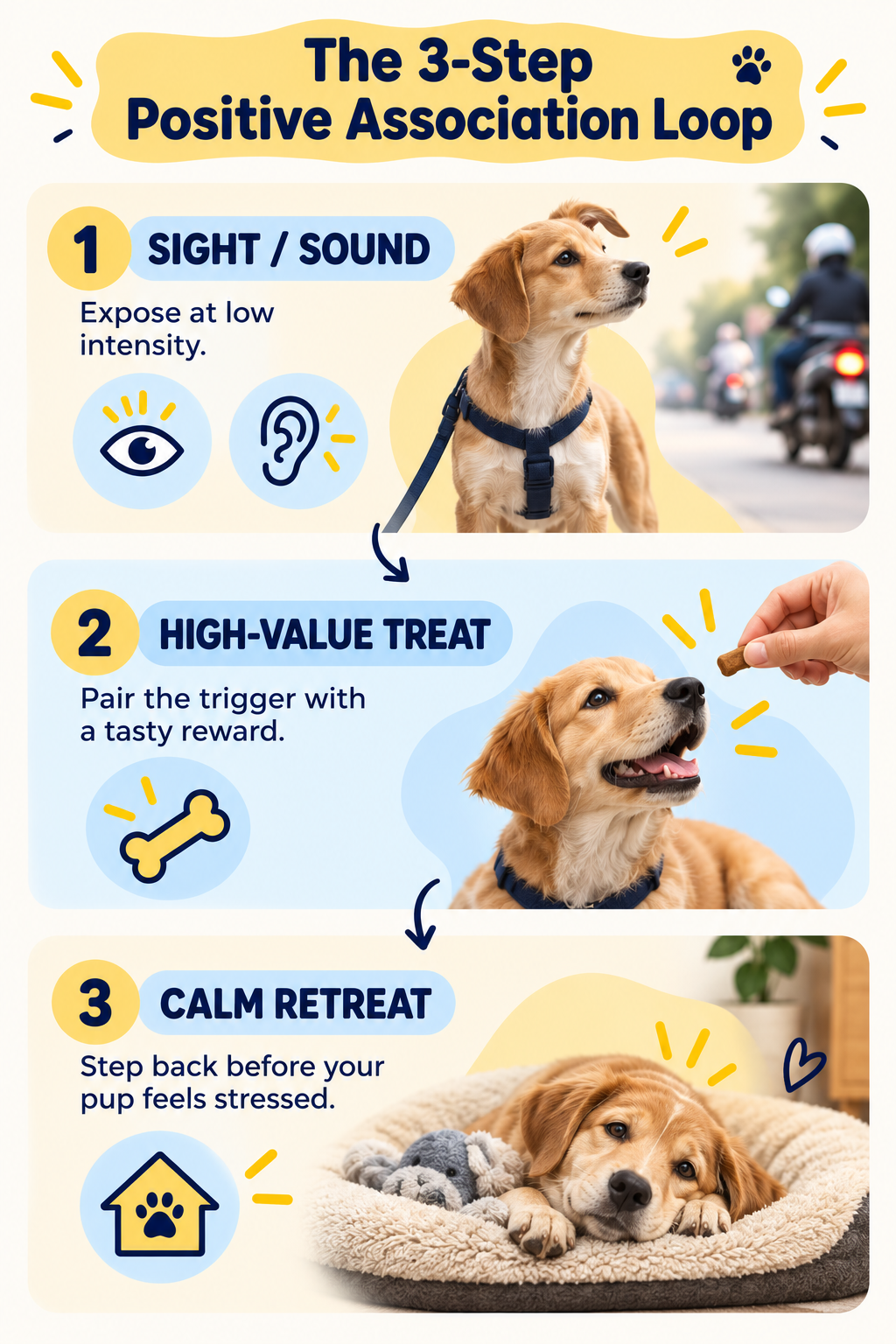
2. How to Socialise an Adult or Rescue DogAdult dogs cannot be rushed. If your adult dog is anxious around triggers, follow the Threshold Framework:
Step 1: Find the Threshold Distance: Identify the exact distance at which your dog notices a trigger (e.g., another dog across the street) without freezing, barking, or lunging.
Step 2: Reward the Look: The moment your dog looks at the trigger, feed a high-value treat (boiled chicken or cheese) before they react.
Step 3: Disengage & Reset: Turn and walk 5 paces away to relieve pressure. Repeat until seeing the trigger automatically makes your dog look back at you for a reward.
Connect for Controlled Playdates on Doffair: Finding balanced, calm playmates for an anxious dog can be challenging. Use the Doffair App to filter local pet profiles by temperament, set up neutral-ground meetups, and book top-rated fear-free trainers in your city.
3. Four Major Socialisation Mistakes to Avoid
Mistake 1: Flooding (Forced Exposure): Dragging a timid dog into a loud pet cafe or crowded dog park does not "cure" fear—it causes learned helplessness or reactive snapping.
Mistake 2: Confusing Socialisation with Play: Your dog does not need to wrestle with every dog they meet. Walking past another dog calmly without greeting is the gold standard.
Mistake 3: Scolding Fear Reactions: Never punish a growl or bark. A growl is an early warning system; punishing it teaches the dog to bite without warning next time.
Mistake 4: Missing Subtle Stress Signals: Watch for lip licking, yawning, shaking off dry fur, and turning the head away—these signals mean your dog needs space immediately.
What Pet Parents Ask Us Most
How many minutes a day should I spend socialising my dog?
Short, positive exposures of 10 to 15 minutes, 3 to 4 times a week, are far more effective than long, exhausting weekend outings.
What should I do if my puppy gets scared during an outing?
Do not force them forward or pick them up in a panic. Create distance from the scary object immediately, allow them to observe from safety, and reward any calm curiosity.
Can I socialise my puppy before they finish all their vaccinations?
Yes, but do it safely. Carry your puppy in a sling or your arms, take them for drives, and host clean, indoor playdates with vaccinated adult dogs only. Avoid public ground until your vet gives the final clearance.