When a dog barks frantically at the door or lunges at a passing dog on a walk, pet parents often jump to the worst conclusion: "My dog is aggressive."
In reality, genuine canine aggression is rare. Most explosive behaviors are cases of leash reactivity fueled by underlying fear, barrier frustration, or lack of early socialisation.
Understanding how to read subtle body language helps you intervene before a mild stress response escalates into a full behavioral crisis.
🐾 Quick Diagnostic
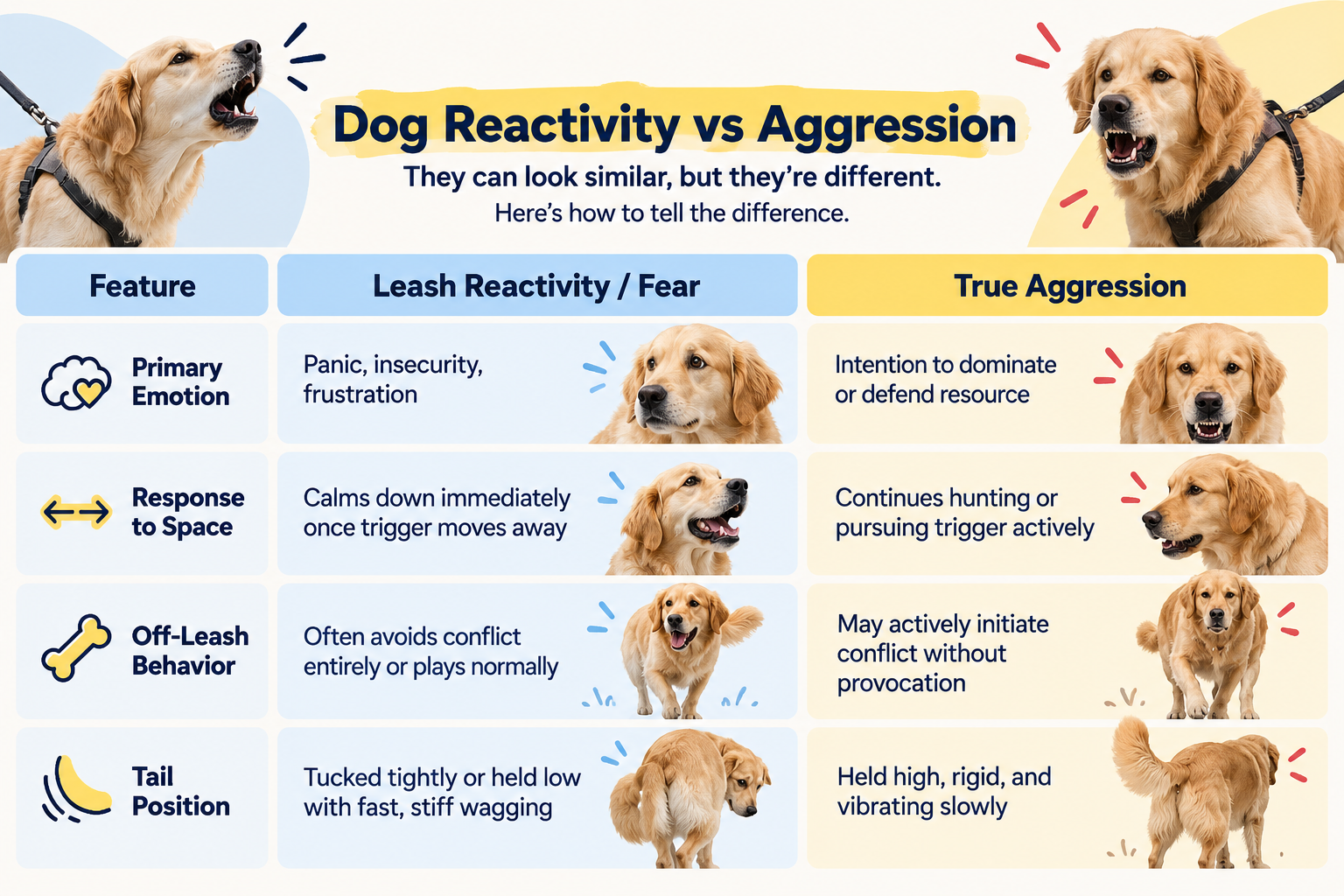
Reactivity: An exaggerated emotional reaction to normal environmental triggers (barking, pulling, jumping).
True Aggression: An intentional desire to cause harm, often rooted in resource guarding or severe territorial defense.
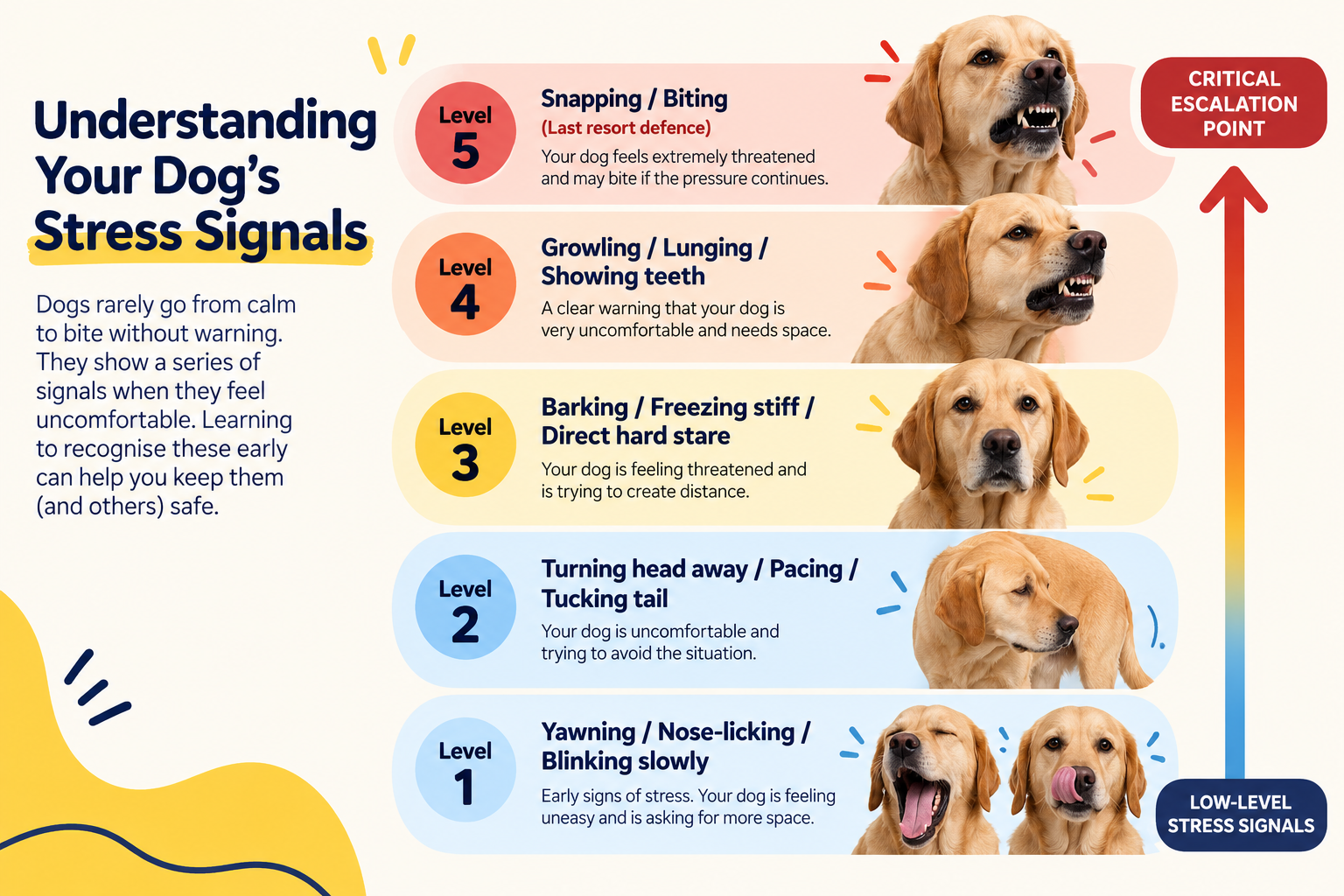
Early Tells: Yawning, eye-whale (showing the whites of the eyes), lip-licking, and body freezing occur long before barking begins.
1. Decoding the Canine Ladder of Aggression
Dogs communicate their discomfort clearly long before they snap. Trouble arises when humans miss the initial subtle signals:
2. Common Warning Signs Around People, Dogs, and New Places
Around Unfamiliar People:
The "Velcro" Freeze: Pressing their body hard against your legs or hiding behind your knees.
Low-Head Barking: Barking with the head held low and tail tucked tightly underneath.
Refusing High-Value Food: If a dog refuses their favorite treat in a new setting, their nervous system has shifted into fight-or-flight mode.
Around Other Dogs:
Hyper-Fixation: Stopping mid-stride and locking eyes with an oncoming dog without blinking.
Frustrated Barking: Whining or high-pitched barking while pulling forward on the leash (often mislabeled as aggression, but driven by a barrier preventing access).
3. Reactivity vs. Aggression: Key Differences
Book Certified Behaviorists & Trainers on Doffair: Resolving reactivity takes the right professional guidance. Use the Doffair App to book certified, positive-reinforcement trainers and discover quiet, low-stress walking routes and pet spaces in your area.
Things Pet Parents Ask Us Most
Why is my dog friendly at the dog park but reactive on a leash?
This is known as barrier frustration. The leash prevents natural canine communication (such as curving approaches and sniffing), making the dog feel trapped and unable to control their personal space.
Should I comfort my dog when they are trembling or scared?
Yes. You cannot reinforce fear by offering calm comfort. Speaking in a soothing voice and providing a safe physical barrier helps your dog feel protected.
Can neutering or spaying stop leash reactivity?
Not necessarily. If the reactivity is driven by fear or poor socialisation, hormonal changes from sterilization will not teach the dog emotional confidence. Targeted behavior modification is still required.