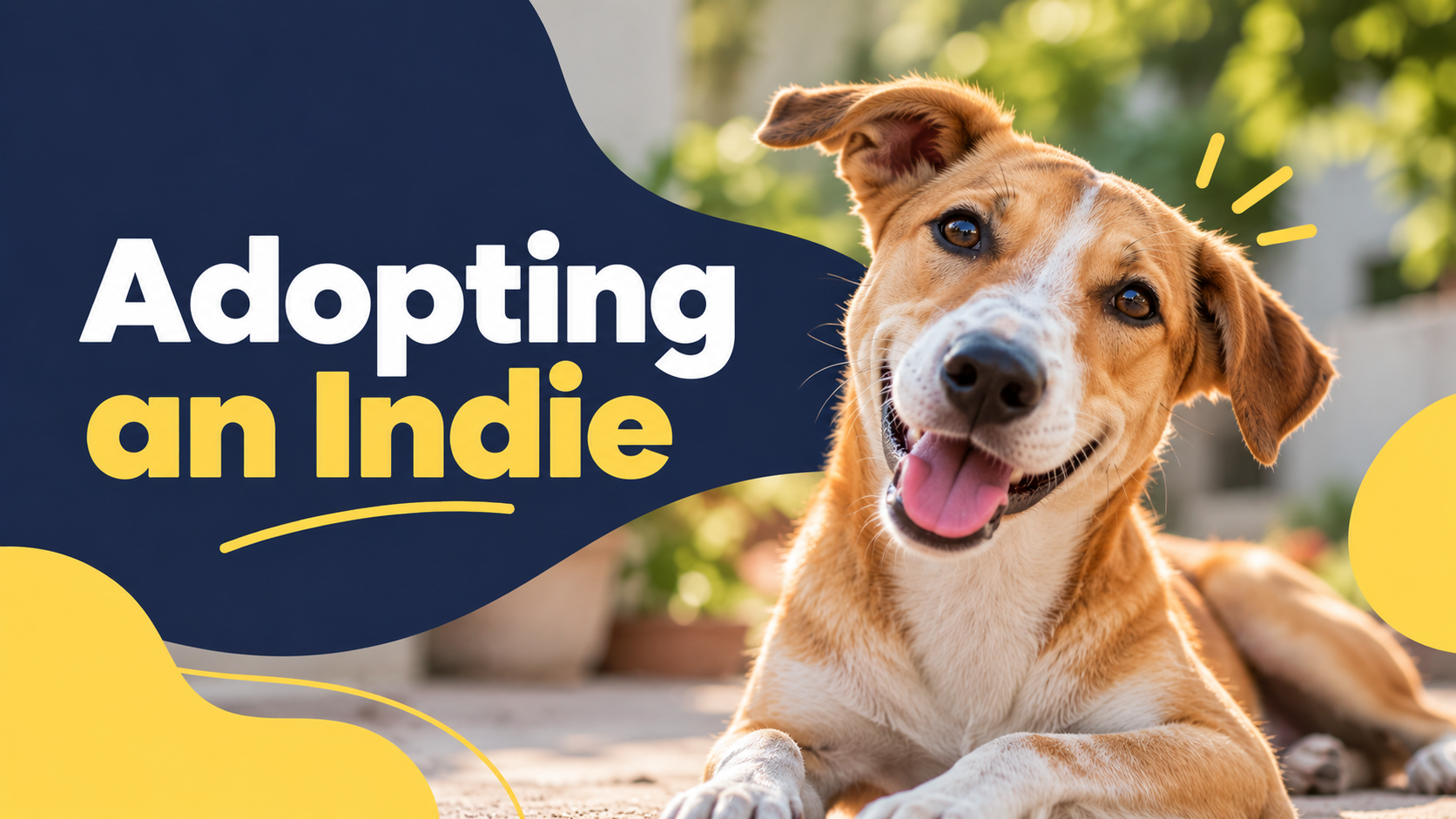
Adopting an Indian Pariah dog or street mix (affectionately known as an Indie) is one of the most rewarding decisions a pet parent can make. Naturally adapted to the Indian climate over thousands of years, Indies are resilient, emotionally intelligent, and fiercely loyal companions.
Yet, deep-seated myths and a lack of clear onboarding guidance often make prospective adopters hesitate. Whether you are rescuing a puppy from a local shelter or taking in a community dog, this comprehensive guide covers medical protocols, breed truths, and practical care steps.
🐾 Quick Summary: Why Adopt an Indie?
Naturally Hardy: Evolutionary fitness means lower risk of genetic disorders (like hip dysplasia or breathing issues common in foreign breeds).
Climate Adapted: Short, self-cleaning coats and high heat tolerance suited for Indian weather.
Low Grooming Needs: Single coat requires minimal brushing and infrequent baths.
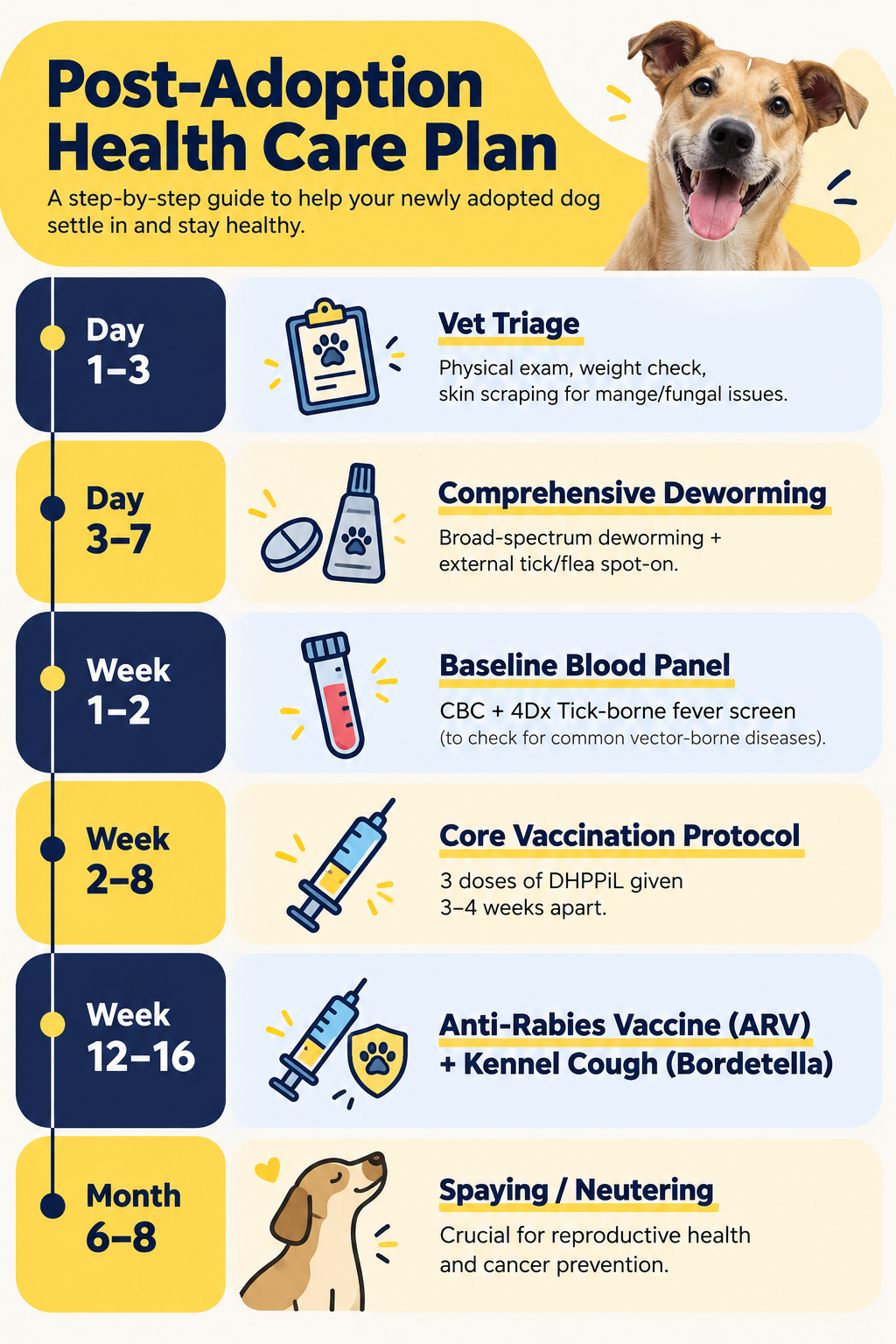
Initial Medical Checklist: Deworming, 3 DHPPiL core vaccines, Anti-Rabies Vaccine (ARV), blood parasite screen, and neutering/spaying at 6-8 months.
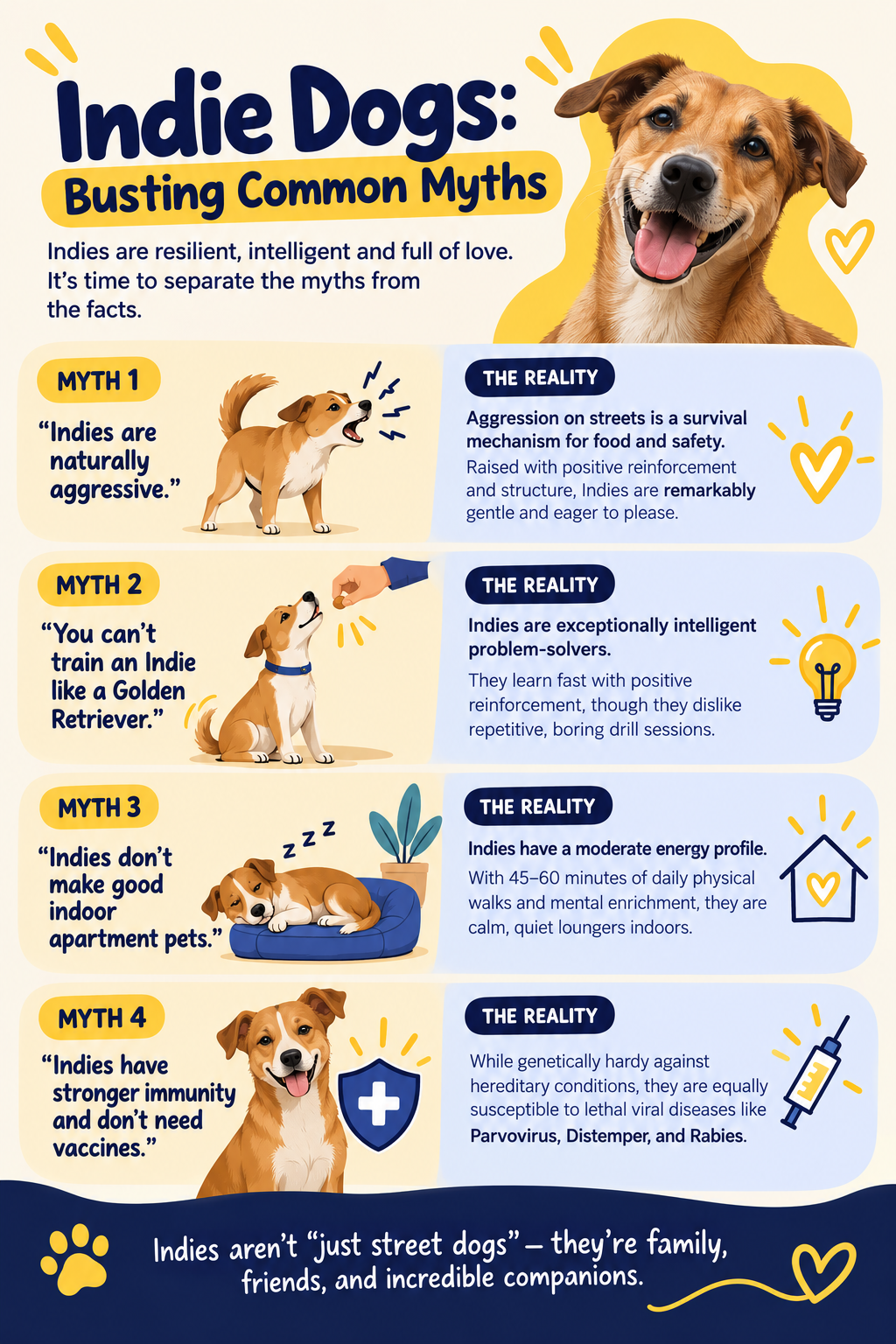
1. Myths vs. Facts About Indian Pariah Dogs
Misconceptions around Indies often stem from observing unsterilized, territory-guarding street packs. In a domestic home environment, their true temperament shines.
2. Immediate Health & Veterinary Protocols
When you bring an Indie home from a shelter or the street, follow this step-by-step medical onboarding plan:
Essential Preventive Care Checklist:
Tick Fever Prevention: Indian brown dog ticks carry blood parasites (Ehrlichia, Babesia). Use monthly vet-recommended spot-on solutions or chewable tick-prevention tablets.
Skin Care: Rescued Indies often suffer from secondary bacterial dermatitis or demodectic mange. Never use human antiseptic liquids (like Dettol/Savlon) on their skin; use prescribed chlorhexidine or benzoyl peroxide washes.
Sterilization: Spaying females eliminates pyometra (life-threatening uterine infection) and drastically reduces mammary tumors. Neutering males reduces prostate issues and territorial roaming impulses.
3. Nutrition: What Should Your Indie Eat?
Indies are not obligate carnivores, but they require a balanced macronutrient profile to thrive.
Commercial vs. Home-Cooked Diet:
High-Quality Puppy/Adult Kibble: Look for meat meal as the first ingredient, with balanced calcium-to-phosphorus ratios.
Balanced Home-Cooked Meals: A simple, vet-approved combination of boiled lean protein (chicken, eggs, or paneer), complex carbohydrates (brown/white rice, pumpkin, sweet potato), healthy fats (fish oil or coconut oil), and dog-safe vegetables (carrots, beans).
Foods to Strictly Avoid: Onions, garlic, raw masala, cooked poultry bones (which splinter), grapes/raisins, and chocolates.
4. Decompression & Socialization: The 3-3-3 Rule
Rescued Indies-especially older puppies or adults-need time to adjust to domestic living. Follow the standard 3-3-3 Decompression Timeline:
First 3 Days (Overwhelmed): Your dog may hide under furniture, refuse food, or avoid eye contact. Provide a quiet, enclosed bed/crate, stick to a low-stimulation routine, and do not invite guests over.
First 3 Weeks (Settling In): They begin figuring out your daily rhythm, testing boundaries, and showing their genuine personality. Start structured potty breaks and basic 5-minute clicker training drills.
First 3 Months (Building Trust): Your Indie feels secure, recognizes your home as their permanent pack territory, and bonds deeply with family members.
Find Everything Your Pup Needs on Doffair: Connect with local pet parents for safe playdates, discover pet-friendly events, and book verified vets, boarders, and groomers in your neighborhood.
5. Daily Care & Exercise Requirements
Physical Exercise (45-60 mins/day): Two 30-minute structured leash walks. Avoid walking during peak afternoon heat (above 32°C) to protect their paw pads from hot tarmac.
Mental Enrichment (15 mins/day): Indies have strong foraging and scenting instincts. Use snuffle mats, puzzle feeders, or hide-and-seek games with kibble to tire their brains.
Grooming: A weekly brushing with a rubber curry comb and a bath once every 4–6 weeks is sufficient. Their short coats naturally shed dirt and dry quickly.
Questions asked by first time indie pet parents:
How much does it cost to adopt an Indie dog in India?
Adoption through registered NGOs and animal welfare shelters is almost always free (or involves a nominal registration/sterilization donation of ₹500-₹2,000). First-year health and starter expenses typically range between ₹10,000 and ₹18,000.
Can an adult Indie street dog adapt to living inside a flat?
Yes. Adult Indies are often easier to house-train than puppies because of their natural cleanliness instincts. With patience, consistent walking times, and positive reinforcement, they adapt quickly to apartment life.
How do I safely introduce an adopted Indie to other family pets?
Never introduce them face-to-face inside a confined room. Conduct the initial greeting on neutral outdoor territory on loose leashes. Parallel walking side-by-side allows both dogs to get used to each other's scent without direct confrontation.